Context
SCPs: From Bioproduction to the Evaluation of Functional, Nutritional, Toxicological Properties and Societal Impacts
This work was supported by the French Government through the France 2030 Investment for the Future programme, administrated by the French National Research Agency (ANR), under grant agreement No. “ANR-23-DIVP-0001”

The µO-PROT project (ANR-23-DIVP-0001) has been selected as one of the winners of the France 2030 “Investment for the Future” Programme, under the initiative “Technology Maturation, Collaborative R&D, Research Valorization and Technology Transfer”, as part of the call for projects “Developing Proteins and Diversifying Protein Sources – Component 2: Diversification of Protein Sources for Food, including the valorization of algae, plant-derived co-products, insects and microorganisms. The project is coordinated by INSA Toulouse in partnership with public-sector organizations, including INRAE and Toulouse INP , as well as private-sector partners, namely CRT-CATAR and EUROSAFE. The scientific coordination of the project is ensured by TBI, a joint research unit of INSA Toulouse (INRAE and CNRS)
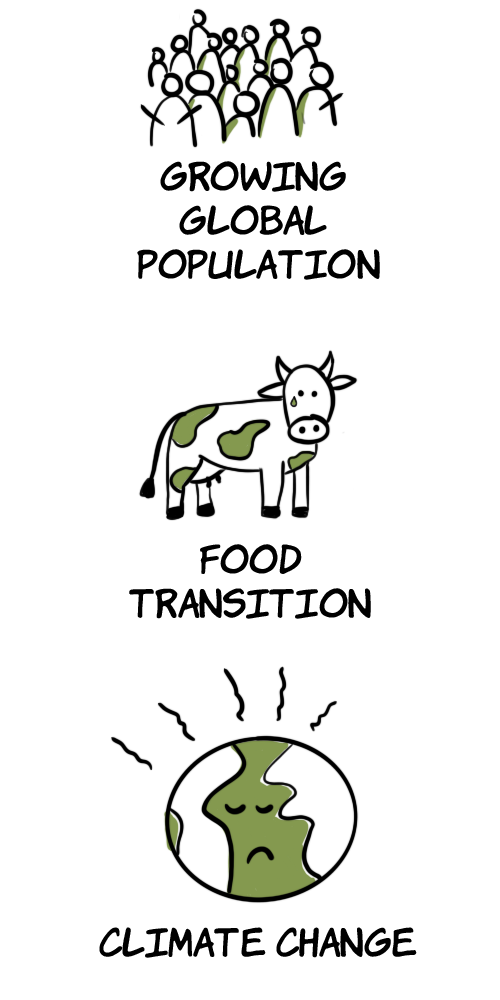
Population growth, climate change and increasing pressure on natural resources pose major challenges for current food systems. Meanwhile, the rapid increase in global protein demand highlights the urgent need to develop alternative, sustainable and safe protein sources to complement conventional protein production and supply systems.
Single-cell proteins (SCP), derived from microorganisms such as yeasts and bacteria, represent a promising alternative sustainable protein production. They enable the rapid production of large amounts of protein with minimal land requirements and reduced resource consumption. In line with the principles of circular economy, SCP can be produced from a wide range of substrates, including industrial co-products, organic waste and CO₂.
Scientific and Technological Challenges
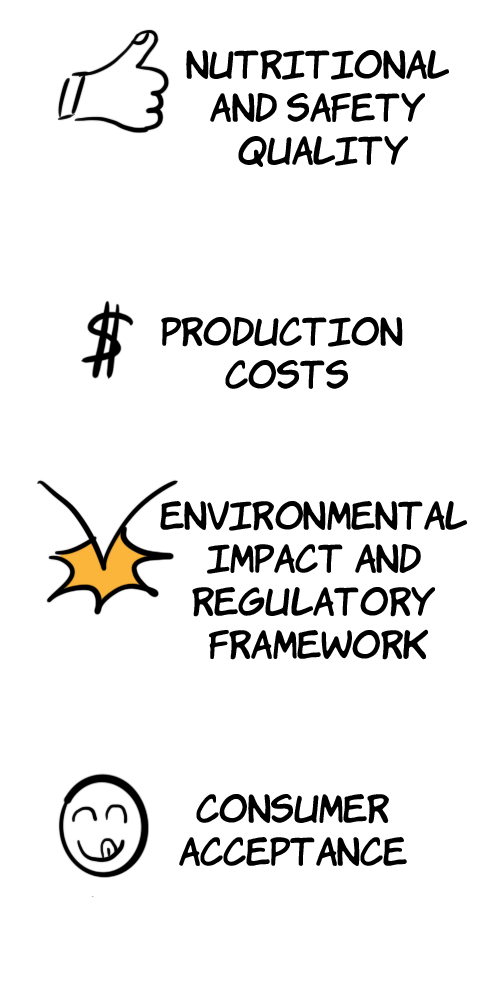
Despite a renewed and growing interest over the past decade, the use of SCPs for human nutrition remains constrained by several key challenges:
- ensuring consistent nutritional quality and high digestibility;
- reducing undesirable compounds, particularly nucleic acids;
- optimizing production processes and downstream processing, which remain costly and energy-intensive.
A major challenge lies in the ability to harness the metabolic plasticity of microorganisms to tailor the composition of SCPs – including proteins, lipids, vitamins and trace elements - in response to cultivation conditions.
Objectives
Objective of the µO-PROT project
The µO-PROT project aims to optimize the production and downstream processing of microbial proteins derived from selected yeasts and bacteria, enabling their use as suitable ingredients for human food applications, while preserving their potential use in animal feed.
The project seeks to develop single-cell proteins (SCPs) with tailored nutritional and functional properties, manufactured through sustainable, scalable, and economically viable processes.
The µO-PROT project: an integrated approach
µO-PROT adopts a multidisciplinary approach by combining:
- microbial engineering/fermentation and process engineering,
- biochemistry
- nutrition and toxicology
- environmental and techno-economic assessment
- human and social sciences, with a particular focus on consumer acceptance
- and consideration of the regulatory framework, especially the “Novel Food” status.
This holistic approach enables a comprehensive evaluation of the full potential of single-cell proteins (SCP), covering the entire value chain from production through to their integration into food systems.
Expected impacts
The project aims to:
- contribute to the development of sustainable alternative protein sources,
- assess the potential of SCPs as alternative protein sources
- reduce the environmental footprint of protein production
- provide reference scientific data on the quality and safety of SCPs
- support industrial stakeholders in their investment decisions
- and contribute to the transition towards more resilient food systems.